
The Benefits of Orthodontics Go Beyond a Straighter Smile
Learn how orthodontics can improve bite health, crowded teeth, airway space, tooth wear, and gum health with clear aligner therapy.
When most people think about orthodontics, they think about creating a straighter, more attractive smile. While appearance is certainly one benefit, the position of your teeth can influence much more than how your smile looks. Improperly positioned teeth may affect how your teeth come together, how forces are distributed when you bite, how easily you can keep your teeth clean, and even how your tongue fits within your mouth.
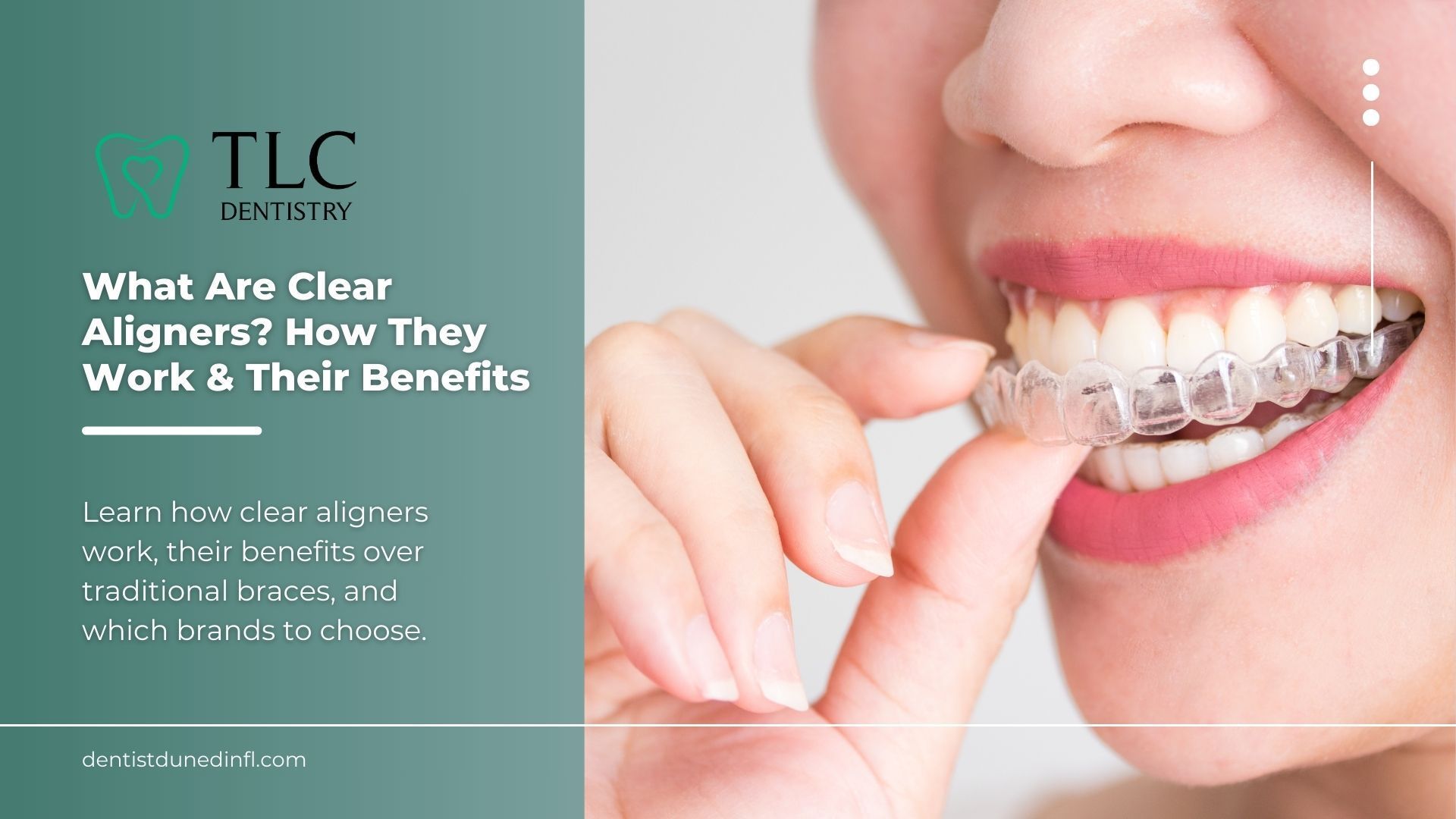
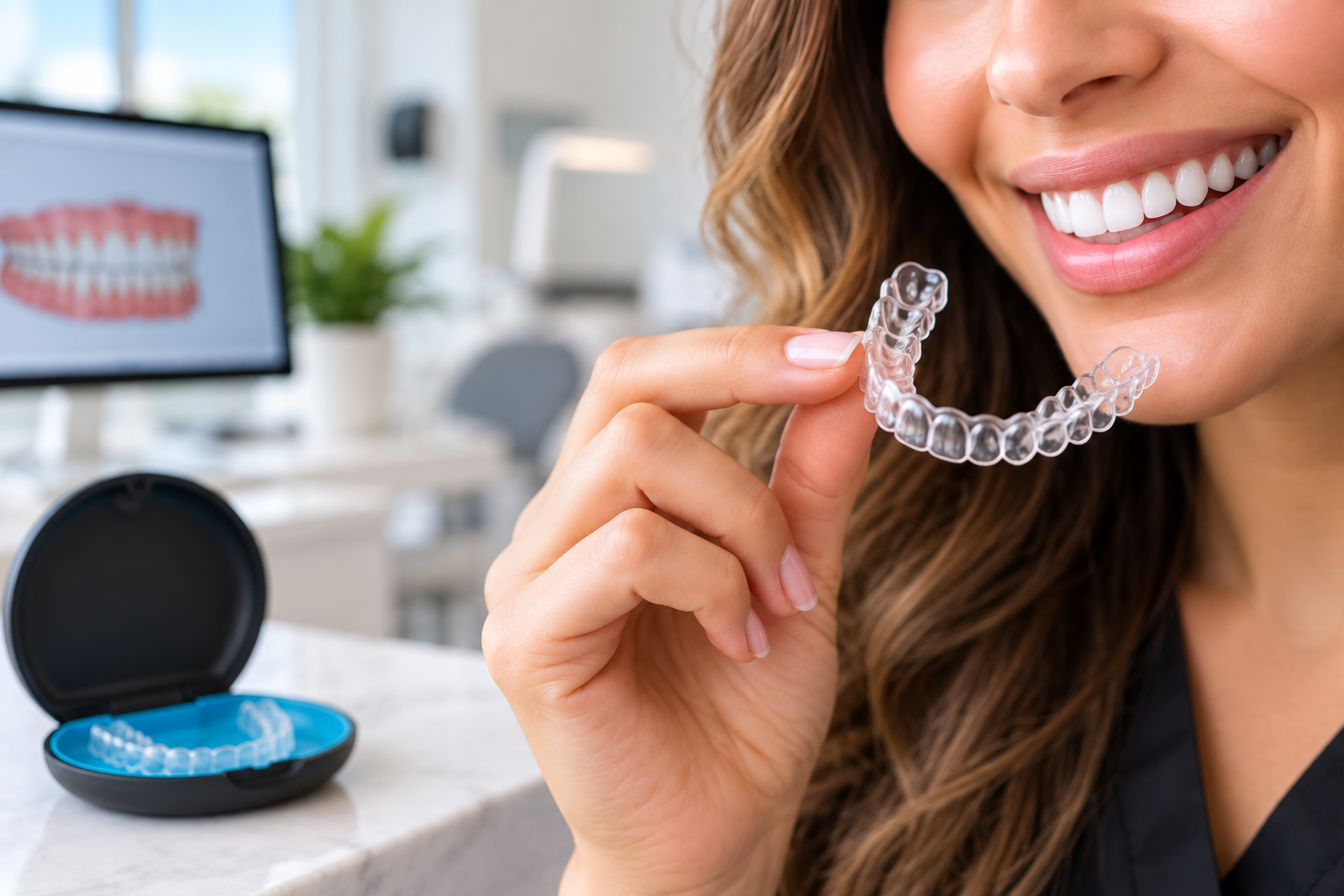
Clear aligner therapy is a form of orthodontic treatment that uses a series of custom-made, removable trays to gradually guide teeth into healthier positions. Each aligner applies gentle, controlled pressure to specific teeth, creating small movements over time. Treatment can help straighten crowded or rotated teeth, close unwanted spaces, and upright teeth that are tilted or leaning into less favorable positions. By improving the angulation and position of the teeth, clear aligners can help create a more balanced bite, improve how biting forces are distributed, and make the teeth easier to clean and maintain. The goal is not simply to make the teeth look straighter, but to place them in positions that support better function, stability, and long-term oral health.
At TLC Dentistry, we look beyond simply making teeth appear straight. Our goal is to evaluate the entire bite and determine how orthodontic treatment may improve long-term dental health, function, comfort, and stability.
Orthodontics, Airway Space, and Mouth Breathing
The relationship between the teeth, jaws, tongue, and airway is an important part of evaluating bite health.
When the dental arches are narrow or teeth are significantly crowded, there may also be limited room available for the tongue to rest comfortably within the mouth. Ideally, the tongue should have adequate space to rest against the palate rather than constantly being positioned low or pushed backward.
Limited oral space does not automatically mean someone has an airway disorder. However, certain bite and jaw relationships may occur alongside symptoms such as:
- Mouth breathing
- Snoring
- Clenching or grinding
- Difficulty comfortably resting the tongue
- Waking with a dry mouth
- Jaw tension or fatigue
Orthodontic treatment can sometimes help improve the position of the teeth and create a more favorable dental arch form. Because breathing and sleep concerns can have many causes, patients with significant snoring or suspected sleep-disordered breathing may also require evaluation by a physician or sleep specialist.
Our goal is to evaluate how your teeth, bite, tongue space, and surrounding structures work together rather than looking at tooth alignment alone.
An Imbalanced Bite Can Increase Tooth Wear
Your teeth are designed to function together as a system. When your bite is well balanced, chewing forces can be distributed across multiple teeth.
When teeth are improperly positioned, certain teeth may receive significantly more pressure than others.
Over time, excessive or uneven bite forces may contribute to:
- Flattened or worn teeth
- Chipped enamel
- Small cracks or fractures
- Tooth sensitivity
- Gum recession in certain areas
- Stress on crowns, veneers, fillings, or other dental work
Patients who clench or grind their teeth can place even greater forces on these areas. Orthodontics can help reposition teeth so that biting forces are distributed more appropriately. In certain cases, improving the bite may also help protect existing dental restorations and reduce unnecessary stress on individual teeth.
This is especially important for patients who have already invested in crowns, veneers, implants, or other restorative dentistry. Protecting that dental work is an important part of maintaining it for as long as possible.
Crowded Teeth and Periodontal Health
Crowded and overlapping teeth can create areas that are difficult to properly brush and floss.
When plaque remains between crowded teeth or along the gumline, inflammation can develop more easily. Over time, persistent inflammation may contribute to gingivitis and periodontal disease.
Crowded teeth may also make professional dental cleanings more difficult because certain surfaces are harder to access.
Straightening crowded teeth can create a dental environment that is easier to maintain.
Improved tooth alignment may make it easier to:
- Brush along the gumline
- Floss between teeth
- Remove plaque and food debris
- Maintain healthier gums
- Reduce areas where tartar frequently accumulates
Orthodontics is not a substitute for brushing, flossing, and professional dental cleanings. However, properly positioned teeth can make good oral hygiene significantly easier.
Clear Aligner Therapy Can Improve More Than Appearance
Modern clear aligner therapy allows us to gradually reposition teeth using a series of removable, nearly invisible aligners.
Treatment may be recommended to address problems such as:
- Crowded teeth
- Spacing between teeth
- Teeth that have shifted after previous orthodontic treatment
- Certain overbites or underbites
- Crossbites
- Uneven bite forces
- Tooth positions that make oral hygiene difficult
At TLC Dentistry, orthodontic planning involves more than simply asking, “Are the teeth straight?”
We evaluate how the teeth fit together, how your bite functions, available space for the teeth and tongue, your periodontal health, and the long-term stability of your smile.
Schedule a Bite Health Evaluation at TLC Dentistry
You do not need severely crooked teeth to benefit from an orthodontic evaluation.
If you experience tooth crowding, uneven tooth wear, clenching, shifting teeth, difficulty flossing, or concerns about your bite, there may be an underlying alignment issue worth evaluating.
Call (727) 785-2467 TLC Dentistry in Dunedin, Florida, to schedule a bite health evaluation and find out whether clear aligner therapy could benefit your smile, bite, and long-term oral health.